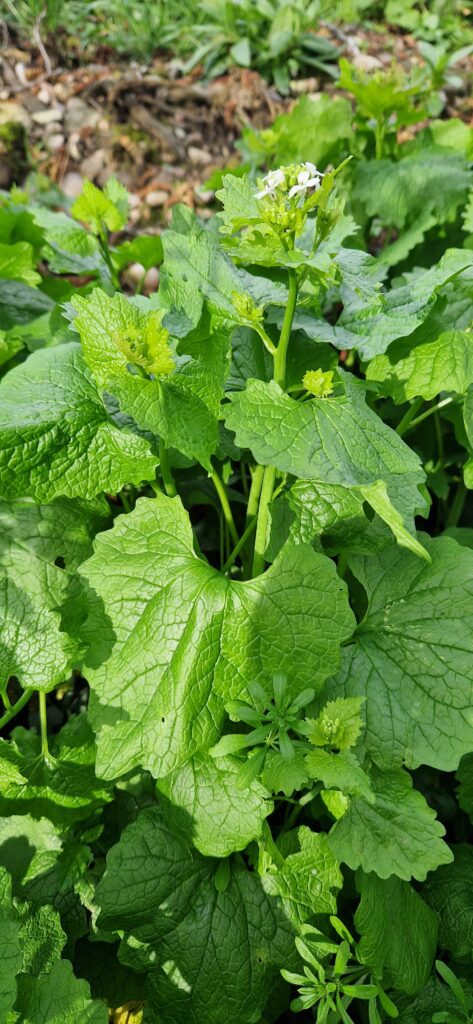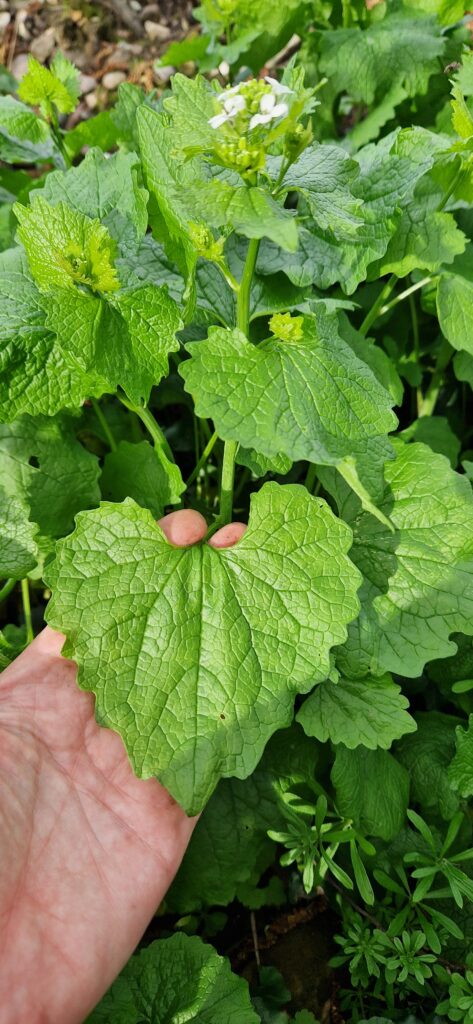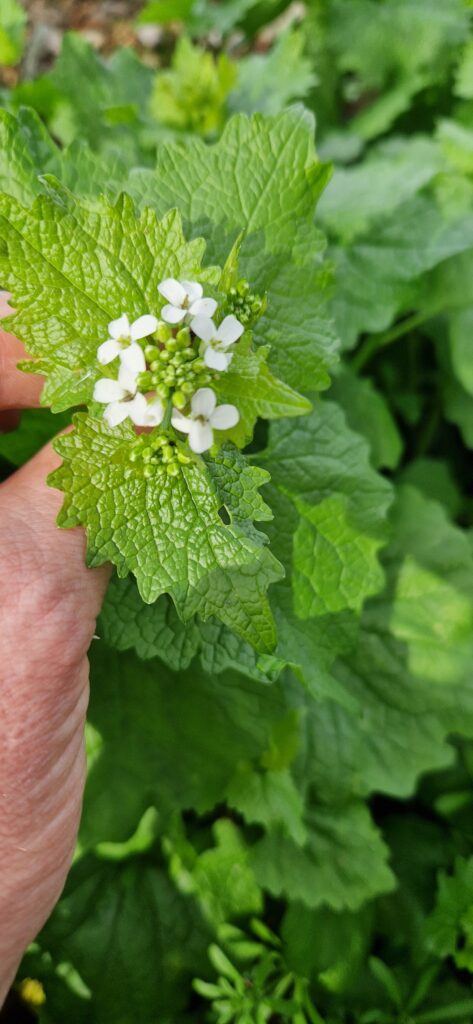
Garlic mustard (Alliaria petiolata), also known as Jack-by-the-hedge, is a highly versatile wild plant treasured for its garlicky flavor and rich history in traditional medicine. Commonly found in hedgerows, woodland edges, and disturbed areas, this plant is a forager’s favorite for its abundance, ease of identification, and culinary uses.
Overview
- Latin Name: Alliaria petiolata
- Common Names: Garlic Mustard, Jack-by-the-hedge, Hedge Garlic, Poor Man’s Mustard
- Family: Brassicaceae (Mustard family)
Natural Habitat
Garlic mustard is native to Europe, Asia, and parts of Africa, but it has also become invasive in North America. It thrives in:
- Hedgerows and woodland edges
- Shady gardens and meadows
- Disturbed and waste areas
It prefers moist, nutrient-rich soils but is highly adaptable and grows in a variety of conditions.
Identification
Leaves
- Young Leaves: Heart-shaped or kidney-shaped with scalloped edges; bright green.
- Mature Leaves: Triangular with toothed edges and a rougher texture.
Flowers
- Small, white, four-petaled flowers appear in clusters at the top of stems.
- Blooms from April to June.
Seeds and Pods
- After flowering, long, slender seed pods (siliques) develop, containing tiny black seeds.
Smell
- When crushed, the leaves emit a strong garlic aroma, making it easy to identify.
Height
- Grows up to 1 meter tall in its second year.
Edibility and Culinary Uses
Garlic mustard is a versatile herb that adds a zesty, garlicky flavor to a variety of dishes:
- Leaves:
- Use young leaves raw in salads, sandwiches, or as a garnish.
- Cook older leaves in soups, pestos, or sautéed dishes to mellow their flavor.
- Flowers:
- Use as a decorative edible garnish or in salads.
- Seeds:
- Grind into a mustard-like paste or use as a spice in cooking.
Recipe Ideas:
- Wild Garlic Mustard Pesto
- Garlic Mustard Soup with Spring Greens
- Herb Butter with Garlic Mustard Leaves
Nutritional Value & Health Benefits
Nutritional Content
- Vitamins: Rich in vitamins A, C, and K.
- Minerals: Contains calcium, iron, and potassium.
- Antioxidants: High in flavonoids, supporting overall health.
Medicinal Benefits
Garlic mustard has been used traditionally for:
- Digestive Health: Acts as a mild diuretic and supports digestion.
- Respiratory Health: Historically used to treat coughs and colds.
- Anti-inflammatory Properties: Can help reduce inflammation and soothe minor skin irritations.
Foraging Tips
- Best Harvesting Season:
- Leaves: Early spring when young and tender.
- Flowers: Mid-spring during bloom.
- Seeds: Late summer, once pods dry.
- Sustainability: Garlic mustard is invasive in many regions, so harvesting helps control its spread.
Folklore & History
Garlic mustard has a long history as both a food source and a medicinal herb. It was traditionally used in England to flavor meats and fish before the advent of imported spices. The name “Jack-by-the-hedge” reflects its common growth along hedgerows. In medieval times, it was believed to protect against evil spirits when worn as an amulet.
Safety Precautions
- Ensure proper identification, as garlic mustard may be mistaken for other similar-looking plants.
- Avoid overconsumption, as large quantities can cause digestive discomfort.
- Forage responsibly in areas free of pesticides and pollutants.
Conclusion
Garlic mustard (Alliaria petiolata) is a flavorful and abundant wild herb that offers both culinary and medicinal benefits. Whether you’re making a zesty pesto or adding a garlicky twist to a salad, this versatile plant is a must-try for any forager. Explore its potential in your kitchen while contributing to ecological balance by harvesting this invasive yet valuable plant!
Not sure about plant identification? Join us for the next foraging event in Charnwood, Leicestershire.