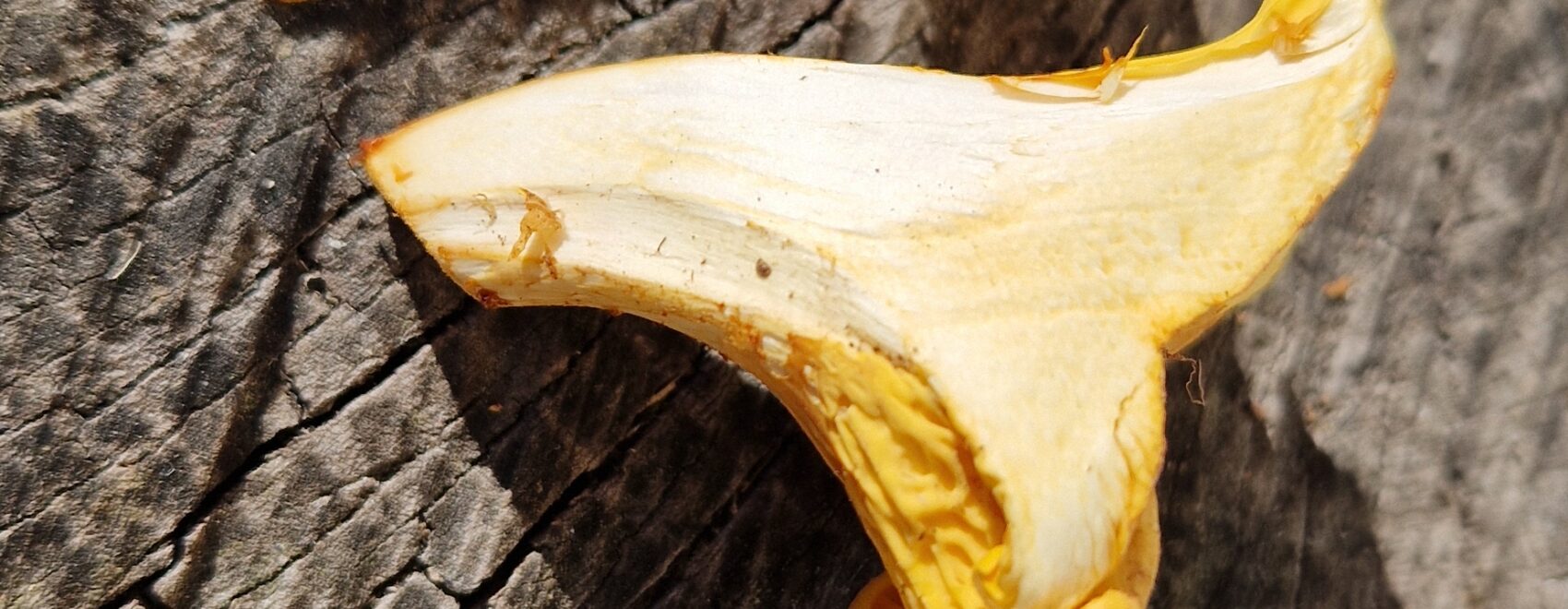
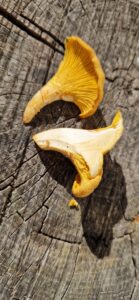
The Chanterelle, scientifically known as Cantharellus cibarius, is one of the most sought-after wild mushrooms, celebrated for its vibrant color, delicate flavor, and distinctive aroma. This mushroom is a favorite among foragers and chefs, often considered a culinary treasure.
Other names: “Golden Chanterelle” or “Girolle.”
Not sure about plant identification? Join us for the next foraging event in Charnwood, Leicestershire.
Habitat
Chanterelles thrive in symbiotic relationships with trees, particularly in mixed hardwood and coniferous forests. They are commonly found across Europe, North America, and parts of Asia. These mushrooms typically appear from late summer to early autumn, preferring moist, well-drained soils, often near oaks, pines, and birches.
Identification features
Cap: The cap of the Chanterelle ranges from 3 to 10 centimeters in diameter and is usually a bright, golden-yellow to orange color. It is funnel-shaped or vase-like, with wavy, irregular edges. The surface is smooth, and the flesh is firm and white, with a fruity aroma reminiscent of apricots or peaches.
Gills: Unlike true gills, Chanterelles have forked, ridge-like folds that run down the stem. These ridges are typically the same color as the cap and are a key identifying feature. The ridges are blunt-edged and decurrent, meaning they run slightly down the stem.
Stem: The stem, or stipe, is solid, smooth, and usually the same color as the cap or slightly paler. It measures between 3 to 8 centimeters in height and 1 to 3 centimeters in thickness. The stem is often thicker at the base and narrows towards the top, blending seamlessly with the cap.
Edibility
The Chanterelle is considered one of the finest edible mushrooms, renowned for its delicate, peppery flavor and fruity aroma. It is versatile in the kitchen, making a wonderful addition to a variety of dishes, from sauces and soups to sautéed vegetables and pasta. Chanterelles are best cooked to release their full flavor, often paired with butter, garlic, or cream.
Recipes
Chanterelles are delicious when sautéed in butter with garlic and herbs, or added to creamy pasta dishes, risottos, and omelets. They also make an excellent addition to soups and sauces, imparting their rich, earthy flavor.
Vitamins Content/Health Benefits
Chanterelles are rich in vitamins and minerals, particularly vitamin D, which is essential for bone health. They also contain significant amounts of B vitamins, such as riboflavin and niacin, which support energy metabolism. Additionally, Chanterelles are a good source of antioxidants, which help protect against cellular damage and inflammation.
Foraging season
Chanterelles are typically found from July to October, though the season may vary depending on local climate conditions. They are often most abundant after periods of rain in late summer and early autumn.
Health warning
When foraging for Chanterelles, accurate identification is crucial, as they can be confused with similar-looking but poisonous species, such as the False Chanterelle (Hygrophoropsis aurantiaca). Always consult an expert or a reliable field guide if you are uncertain about the identification.
Here is a video of false chanterelle to help you with identification.