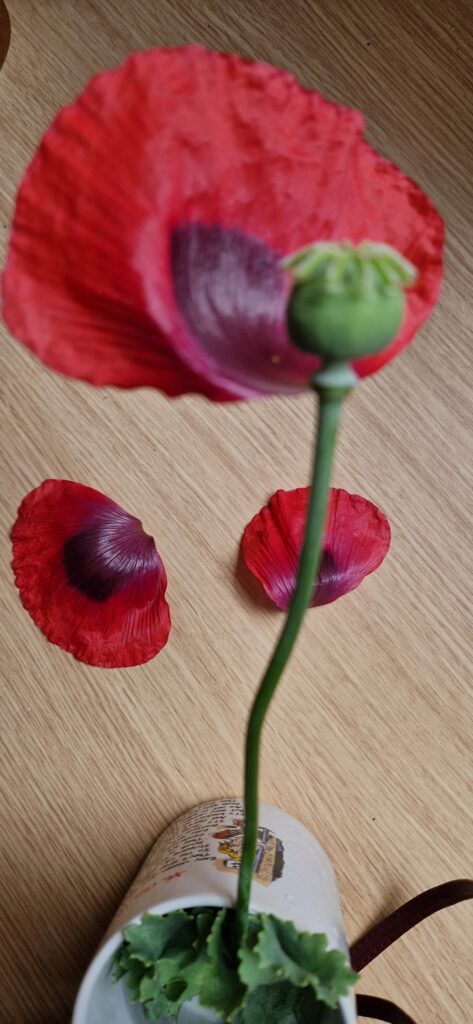
Latin name: Papaver rhoeas
Other names: Breadseed poppy
Habitat: Poppies are common in many parts of the world and can be found in fields, gardens, and disturbed areas. They often grow in well-drained soil with plenty of sunlight.
Not sure about plant identification? Join us for the next foraging event in Charnwood, Leicestershire.
Appearance
Leaf Description:
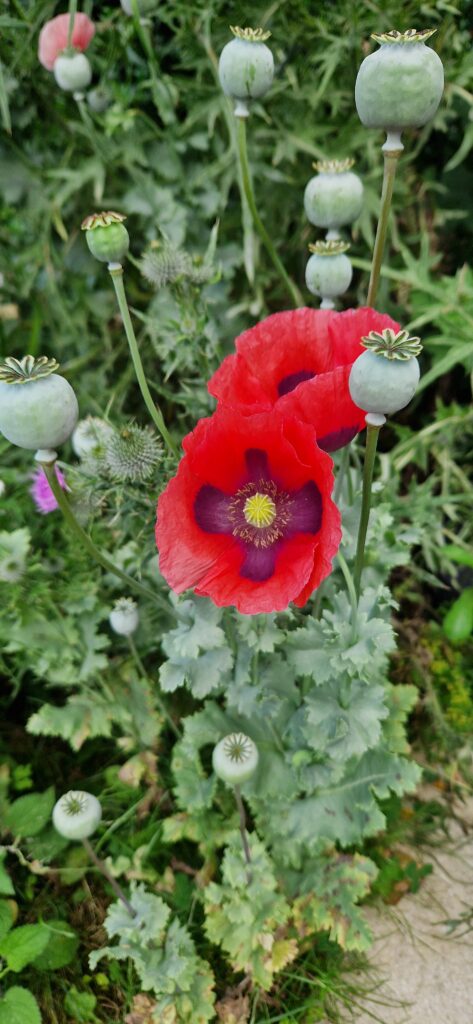
- The leaves of poppies are lobed, blue-green in color, and have a smooth to slightly hairy texture. They are arranged alternately along the stem and can be quite large, especially near the base of the plant.
Flower Description:
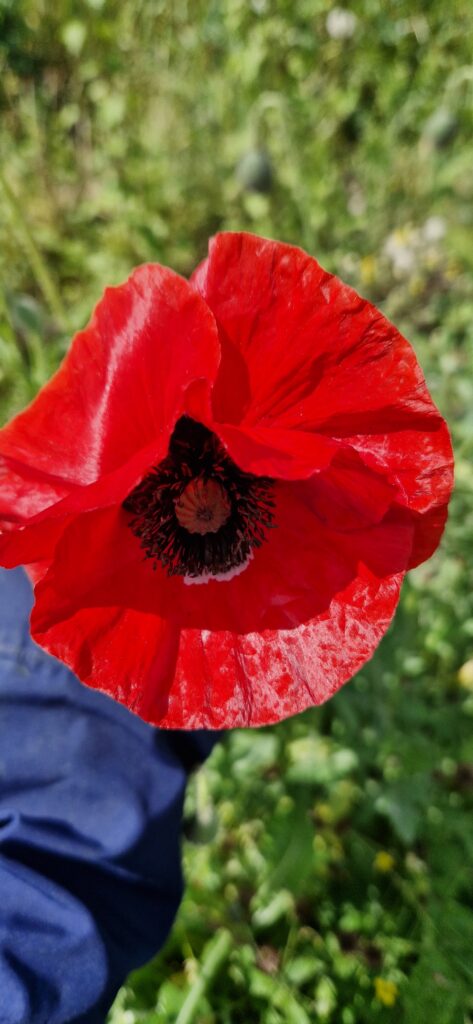
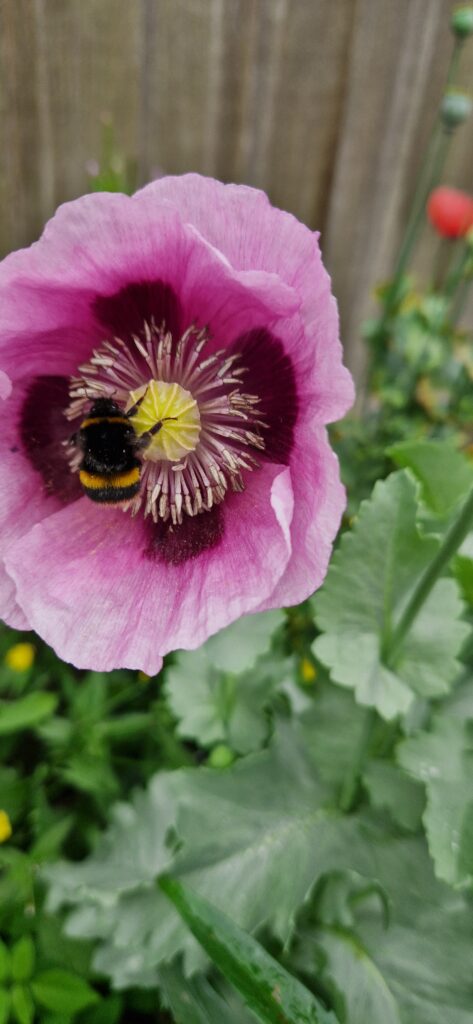
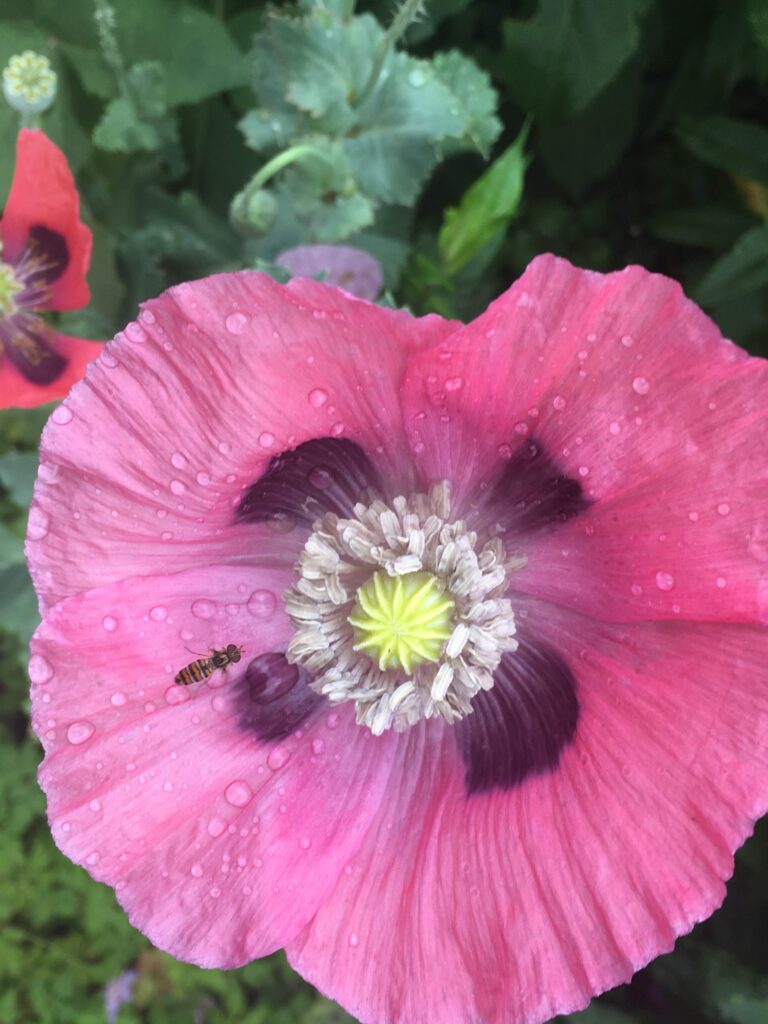
- Poppies produce large, showy flowers that come in various colors, including white, pink, red, and purple. Each flower has four to six petals, which can be crinkled or smooth, and a distinctive dark center with numerous stamens
Stem Description:
- Poppies have tall, slender stems that can grow up to 1 meter in height. The stems are often covered in fine hairs and exude a milky latex when cut.
Fruit/Seed Description:
- After flowering, poppies produce a spherical seed capsule that contains numerous tiny seeds. The capsule is topped with a star-shaped disk and, when mature, releases seeds through small pores.
Edibility
- Poppy seeds are edible and commonly used in baking and cooking. They have a nutty flavor and can be sprinkled on bread, muffins, and cakes or used as a spice in various dishes.
Recipes
Poppy seeds can be used in a variety of culinary preparations, including pastries, salads, and dressings. They can also be ground into a paste for fillings or used as a topping for baked goods.
Traditional Czech poppy seeds wrap
Vitamins Content/Health Benefits
- Poppy seeds are rich in minerals such as calcium, magnesium, and zinc. They are also a good source of dietary fiber and healthy fats. Poppy seeds have been used in traditional medicine for their purported sedative and pain-relieving properties.
Foraging season
Poppies are best harvested when the seed capsules have matured and turned brown. The seeds can be collected by shaking the dried capsules over a container.
Folklore/Interesting Info
- Poppies have been used in traditional medicine and folklore for centuries. In ancient times, they were associated with sleep and death, symbolizing eternal rest and remembrance.
- The latex derived from the seed capsules of the opium poppy is the source of opium, from which morphine and other pain-relieving drugs are derived.
- Poppies are often worn on Remembrance Day in many countries to honor soldiers who have died in war, inspired by the poem “In Flanders Fields.”
Health warning
- While poppy seeds are generally safe for consumption, the unprocessed latex from the opium poppy can be highly toxic and should not be ingested. It is important to distinguish between culinary poppy seeds and other parts of the plant, which contain alkaloids that can be harmful if consumed in large quantities. Additionally, individuals with known allergies to poppies should avoid them. Always ensure poppy seeds are sourced from reputable suppliers to avoid contamination.