Comfrey (Symphytum officinale), also known as Knitbone, is a traditional herbal plant with a long history in European folk medicine.
For centuries, its leaves and roots have been associated with poultices, infused oils and salves traditionally used for bruises, sprains and other injuries. Today, Comfrey remains an interesting plant to study for its history and botanical properties, although modern safety concerns mean that homemade preparations require particular caution.
⏳ Patience Required
Medium
🧺 Traditional Ingredients
For a historical botanical balm;
- 50 g thoroughly dried Comfrey leaves
- 500 mL Extra Virgin Olive Oil (EVOO)
- 10 g beeswax pellets
- Vitamin E oil (optional)
👩🍳 Method
Explore a Traditional Comfrey Balm Preparation
An educational introduction to historical dried-herb infused oils and balms.
Phase 1 Traditional Comfrey-Infused Oil
Historical preparations involved steeping dried Comfrey leaves in a carrier oil.
An illustrative recipe combines 50 g thoroughly dried Comfrey leaves with 500 mL EVOO in a clean, completely dry glass jar.
The plant material would be kept submerged, with the jar labelled and stored in a cool, dark place for approximately 4–6 weeks before thorough filtration.
Strain thoroughly through clean muslin or an unbleached coffee filter into a completely dry container.
Discard the preparation if you notice mould, unexpected bubbling, moisture or an unusual smell.
Phase 2 Melt, Pour & Label
In general balm-making, beeswax is gently melted into the filtered infused oil using a bain-marie.
The mixture is stirred, removed from the heat and poured into a clean, completely dry container.
Vitamin E may be added as an antioxidant to help slow oxidation of the oils, but it is not an antimicrobial preservative.
For educational use: This information explores the historical preparation of Comfrey-infused oils and balms. Comfrey contains pyrrolizidine alkaloids, and the safety of a homemade infusion cannot be established from the recipe alone. Do not use homemade Comfrey preparations as medical treatments or distribute them for topical use without appropriate safety assessment. Seek medical advice for injuries, persistent pain or skin problems.
🌿 Topical Use Guidelines
- Never consume Comfrey preparations. Internal use carries serious liver toxicity risks.
- Never apply Comfrey to open wounds, broken or damaged skin.
- Avoid Comfrey during pregnancy and breastfeeding. Do not use on children without appropriate professional advice.
- Do not assume Comfrey leaf preparations are automatically safe. PA content varies with plant material, species, growing conditions and processing.
- Do not use homemade Comfrey balm for serious injuries, fractures, sprains or unexplained swelling. Seek appropriate assessment and treatment.
- Avoid the eyes, mouth and other mucous membranes.
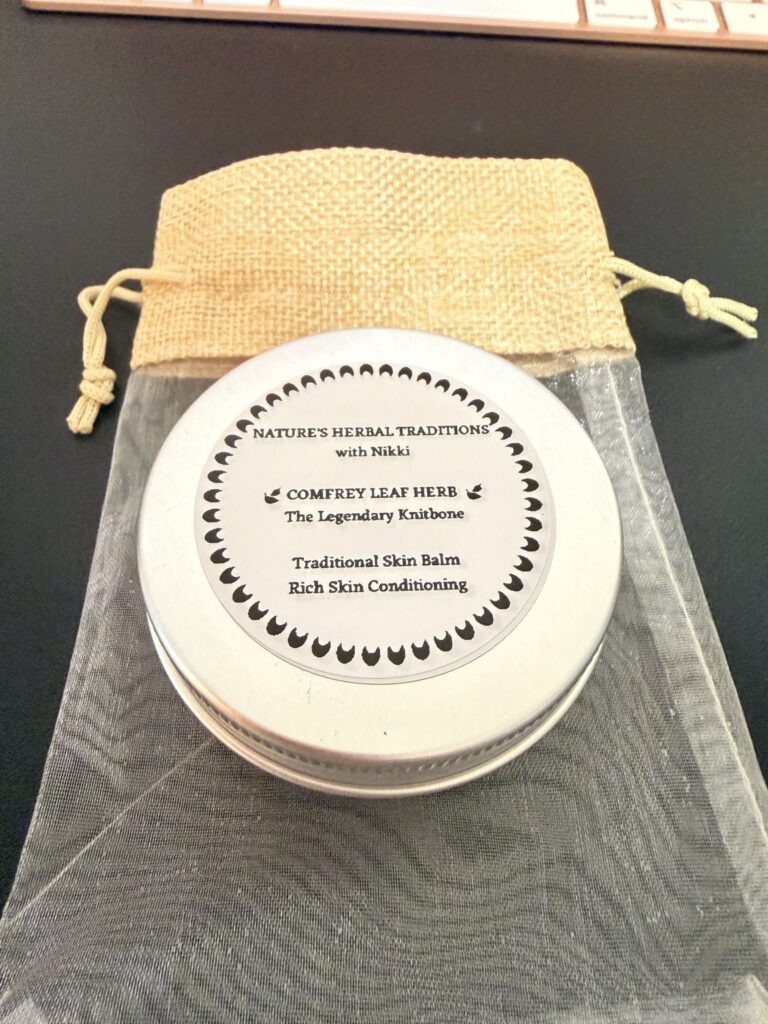
- For any commercially supplied Comfrey cosmetic, follow the specific safety assessment, ingredient restrictions and label precautions.
Traditional Uses & Herbal Wisdom
Comfrey (Symphytum officinale) has been valued for centuries in European traditional herbal practices.
Its historical reputation is closely associated with its common name, Knitbone, reflecting the belief that it supported recovery from injuries.
Its traditional uses include:
- Traditional bruising preparations: Historically incorporated into poultices and salves for bumps and bruises.
- Sprains and strains: Traditionally used in external preparations applied to areas of muscular or joint discomfort.
- Historical wound care: Comfrey leaves and roots were used in traditional poultices and dressings.
- Skin conditioning: Comfrey-derived ingredients have been investigated for their potential skin-related properties.
Traditional Herbal Preparations
Fresh Leaf Comfrey Poultice: Historically, crushed Comfrey leaves were applied to bruises, sprains and wounds. This is historical information, not a recommendation for modern treatment.
Infused Oil: Dried Comfrey leaves were traditionally steeped in carrier oils to produce herbal preparations.
Balms and Salves: Comfrey-infused oils have historically been combined with beeswax to create topical salves. Modern cosmetic preparations require appropriate safety assessment, particularly concerning pyrrolizidine alkaloids.
⚠️ Safety / Foraging Note
Always be 100% certain of your identification before harvesting.
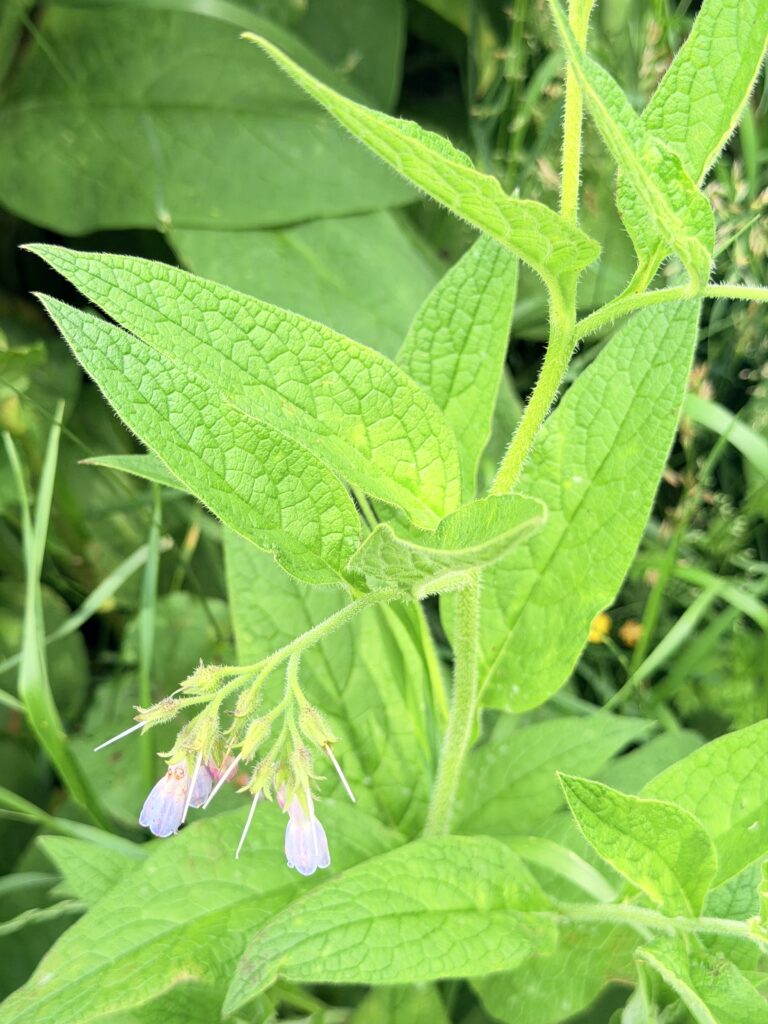
Comfrey (Symphytum officinale) is a perennial plant with large, hairy leaves and drooping clusters of tubular flowers.
It may be confused with other members of the borage family, and garden varieties or hybrids can complicate identification.
Only forage within your level of experience and use a reliable botanical identification guide.
Harvest responsibly, leaving sufficient plants and flowers for pollinators and natural regeneration.
For educational demonstrations, clearly distinguish historical herbal practice from modern evidence-based treatment and cosmetic safety requirements.
Photos: