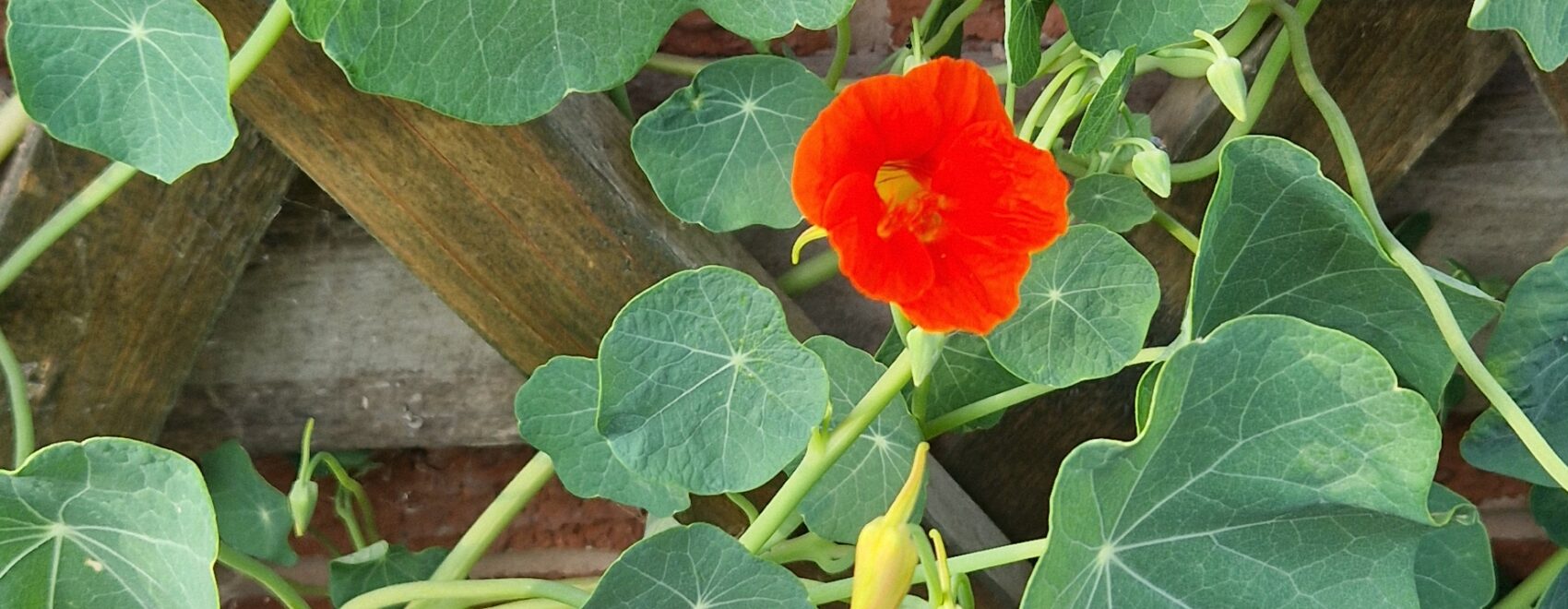
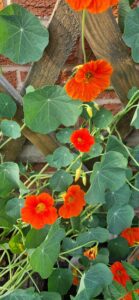
With its vibrant flowers, round shield-like leaves and peppery flavour, Nasturtium is a real garden treasure. Almost every part of this cheerful plant can be put to use in the kitchen, making it one of the most rewarding ornamental plants for the adventurous forager.
Not sure about plant identification? Join us for the next foraging course in Charnwood, Leicestershire, and learn how to safely identify wild plants.
Habitat
Originally native to South America, Nasturtium is now widely cultivated in gardens throughout the UK. It thrives in sunny positions, particularly in well-drained soil, and is often grown in flower beds, containers and hanging baskets.
It spreads easily, sometimes climbing over other plants or trailing along the ground. Although it is not generally a wild native plant in Britain, it frequently self-seeds in gardens.
Identification Features
- Flowers: Bright, trumpet-shaped flowers with five petals and a distinctive spur at the back. Colours range from yellow and orange to deep red.
- Leaves: Rounded, almost circular leaves with veins radiating from a central point, resembling tiny umbrellas or water-lily leaves.
- Stems: Soft, fleshy and trailing or climbing, often spreading considerably.
- Seeds: Develop in clusters of three rounded sections, initially green and becoming larger as they mature.
- Smell and Taste: Leaves and flowers have a distinctive peppery, slightly mustard-like flavour.
Lookalikes
Nasturtium is relatively distinctive, particularly when flowering, but its rounded leaves may be confused with other garden plants.
One possible confusion is the Marsh Pennywort (Hydrocotyle vulgaris), which also has round leaves. However, Marsh Pennywort has much smaller, inconspicuous flowers and grows in wet habitats.
The distinctive trumpet-shaped flowers and trailing growth habit make Nasturtium easier to recognise.
Edibility
Edible Parts: Flowers, leaves, young stems and immature green seeds.
- Flowers: Beautiful additions to salads, with a peppery flavour.
- Leaves: Can be used in salads, pesto and sandwiches.
- Seeds: Immature green seeds can be pickled and used as a substitute for capers. Often called poor man’s capers.
- Stems: Young, tender stems can be eaten and have a peppery taste.
Key Vitamins & Nutrients:
- Vitamin C
- Antioxidants, including carotenoids
- Glucosinolates (mustard-like compounds)
Medicinal Uses: Traditionally valued in herbal medicine for its antimicrobial properties. Nasturtium preparations have historically been used for respiratory and urinary complaints, although traditional uses should not be confused with proven treatments.
Ecology & Traditional Uses
Nasturtium flowers attract bees and other pollinating insects, providing a useful nectar source during the summer months.
Folklore & Stories:
The botanical name Tropaeolum comes from the Greek word tropaion, meaning trophy.
Look closely at the plant and you can see why! Its round leaves resemble soldiers’ shields, while its bright red and orange flowers were thought to resemble blood-stained helmets hanging from a trophy pole after battle.
In fact, the plant was named after this image of a Roman victory trophy.
Nasturtium also became popular in European gardens as a colourful edible plant, bringing both beauty and flavour to the kitchen.
Season
- Spring: New leaves and shoots begin to develop as temperatures rise.
- Summer: Main flowering season, producing bright flowers and abundant leaves.
- Late Summer – Autumn: Flowers continue, while green seed pods develop and can be collected for pickling before they mature.
- Winter: Usually dies back with frost in the UK, although it may self-seed and return the following year.
Health Warning
Do not use Nasturtium as a substitute for medical treatment.ct identification before consuming any wild plant.
Only consume plants that have been correctly identified as Nasturtium (Tropaeolum majus).
Wash flowers and leaves thoroughly before eating.
Introduce peppery plants gradually, as mustard-like compounds may irritate sensitive digestive systems.
Avoid medicinal preparations during pregnancy or breastfeeding unless advised by a qualified healthcare professional.