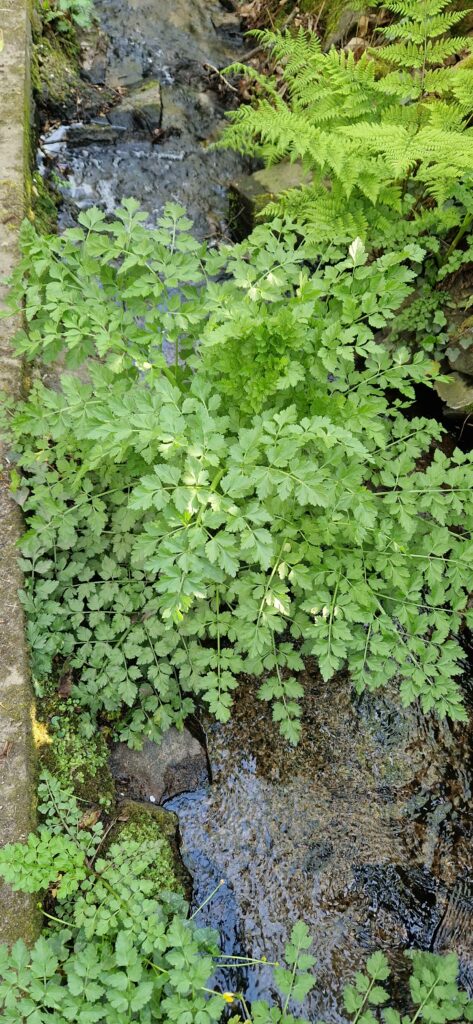
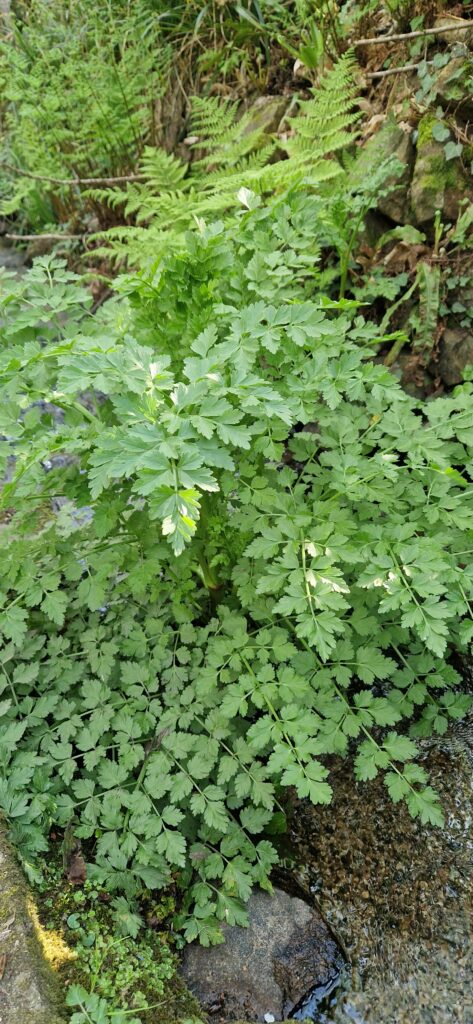
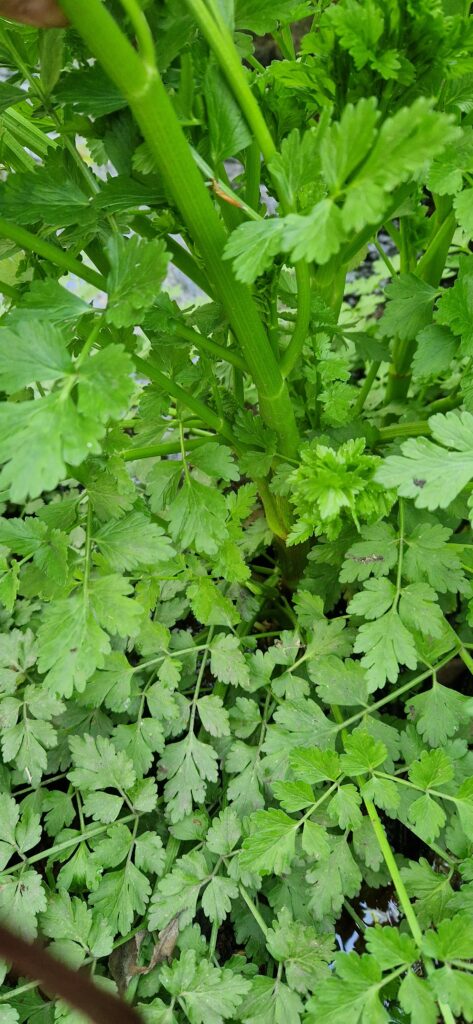
Hemlock Water Dropwort is widely regarded as the most poisonous wild plant in the UK. Despite its attractive appearance and resemblance to edible members of the carrot family, it is extremely toxic and responsible for numerous serious poisonings. This is a plant to learn for avoidance and safety, not for consumption.
Not sure about plant identification? Join us for the next foraging course in Charnwood, Leicestershire, and learn how to safely identify wild plants.
Habitat
Hemlock Water Dropwort grows in wet habitats, including riverbanks, streams, ditches, marshes, wetlands, and damp meadows. It prefers nutrient-rich, waterlogged soils and is commonly found across England, Wales, and parts of Scotland, particularly in lowland areas.
It is often found growing alongside edible plants such as wild celery, water parsnip, and cow parsley — increasing the risk of dangerous confusion.
Appearance
Leaf Description
The leaves are bright green, glossy, and divided into broad, toothed leaflets, giving a fern-like appearance. They are hairless and can resemble edible members of the carrot family, especially to inexperienced foragers.
Flower Description
Flowers appear in large, flat-topped white umbels during early to mid-summer. Each umbel consists of many small white flowers, typical of the Apiaceae (carrot) family.
Stem Description
The stems are thick, hollow, and strongly ridged, often marked with purple blotches or streaks. When cut or crushed, the stem may ooze a yellowish sap and has an unpleasant smell.
Root Description
The roots are a critical identification feature: clusters of pale, swollen tubers that resemble small parsnips or potatoes. These tubers contain the highest concentration of toxins.
Edibility
🚫 Hemlock Water Dropwort is NOT edible.
All parts of the plant are highly toxic, particularly the roots. Ingestion can cause seizures, respiratory failure, and death, even in small amounts. Cooking, drying, or boiling does not neutralise the toxins.
Toxicity & Health Risks
The plant contains oenanthotoxin, a potent neurotoxin that affects the central nervous system. Symptoms of poisoning can include:
- Severe abdominal pain
- Vomiting and diarrhoea
- Tremors and seizures
- Loss of consciousness
- Respiratory failure
Livestock and pets are also at high risk, and fatalities have occurred after accidental ingestion.
Lookalikes
Hemlock Water Dropwort is often confused with edible plants, including:
- Wild Celery (Apium graveolens)
- Water Parsnip (Sium latifolium)
- Cow Parsley (Anthriscus sylvestris)
Key danger signs include wet habitat, thick hollow stems, and tuberous roots. When in doubt, do not touch or harvest.
Foraging Season
The plant is visible from spring through autumn, with flowers typically appearing from June to August. Roots are present year-round, making winter disturbance particularly dangerous.
Folklore & Interesting Facts
Historically, Hemlock Water Dropwort has been associated with executions and poisonings, earning grim nicknames such as “Dead Man’s Fingers”. It is considered more dangerous than poison hemlock (Conium maculatum), despite being less well known.
Health Warning
⚠️ Extreme caution required.
Never consume this plant. Avoid disturbing roots, especially in wet ground. Always positively identify plants before foraging, and never rely on smell or taste as identification tools.
Not sure about plant identification? Join us for the next foraging event in Charnwood, Leicestershire.