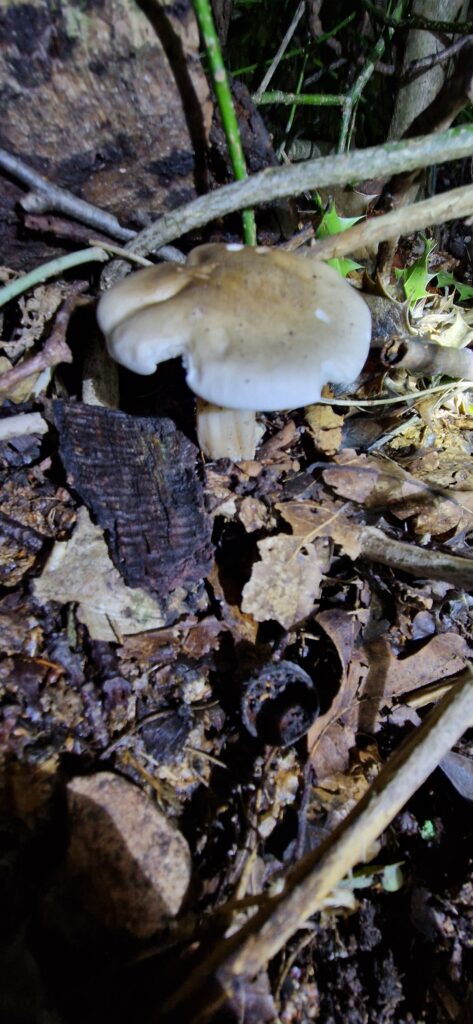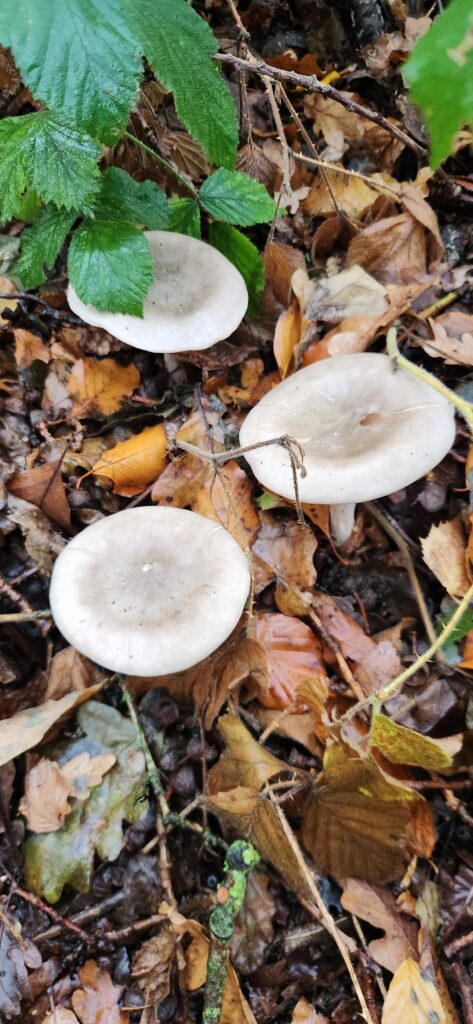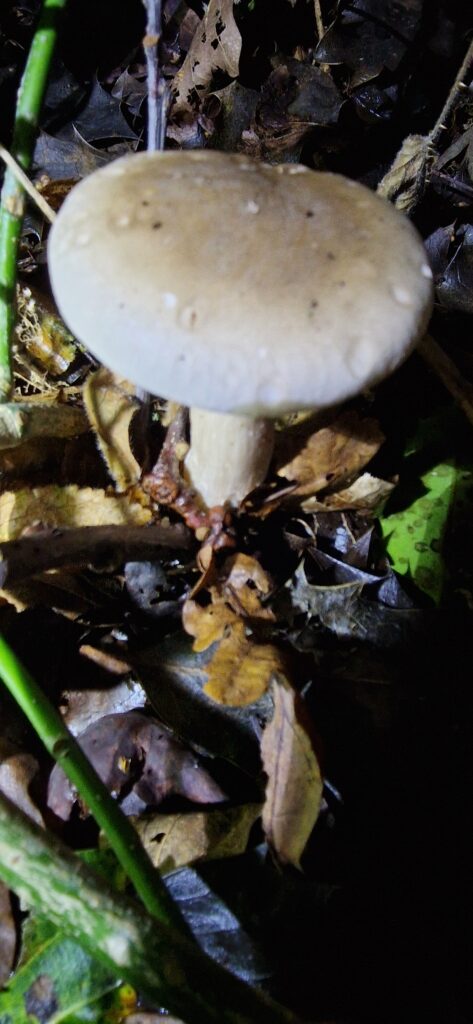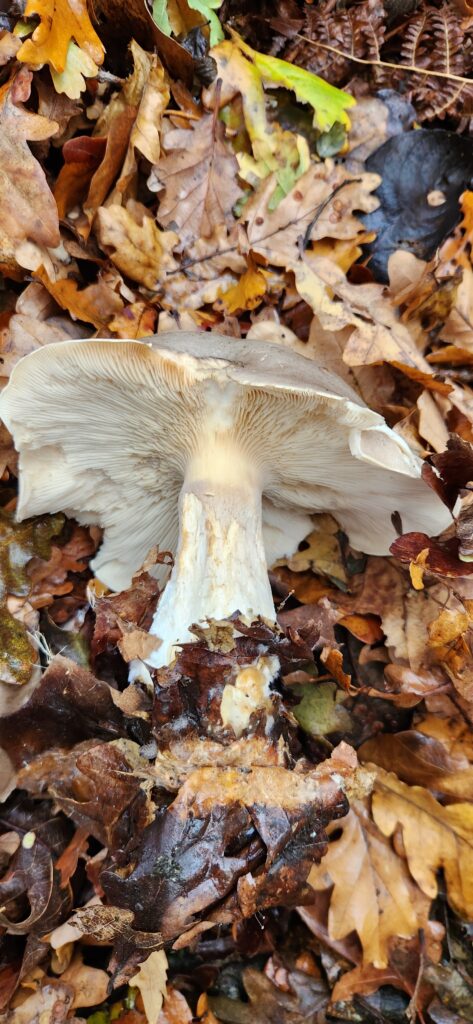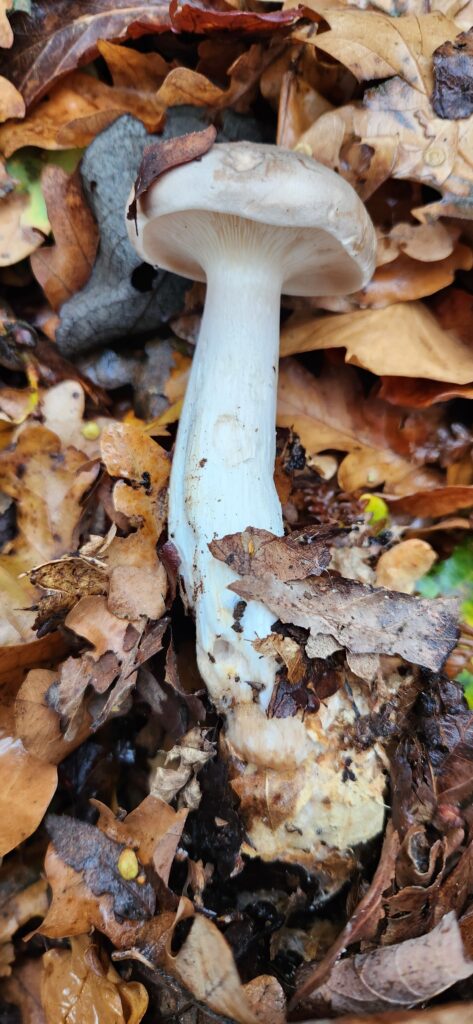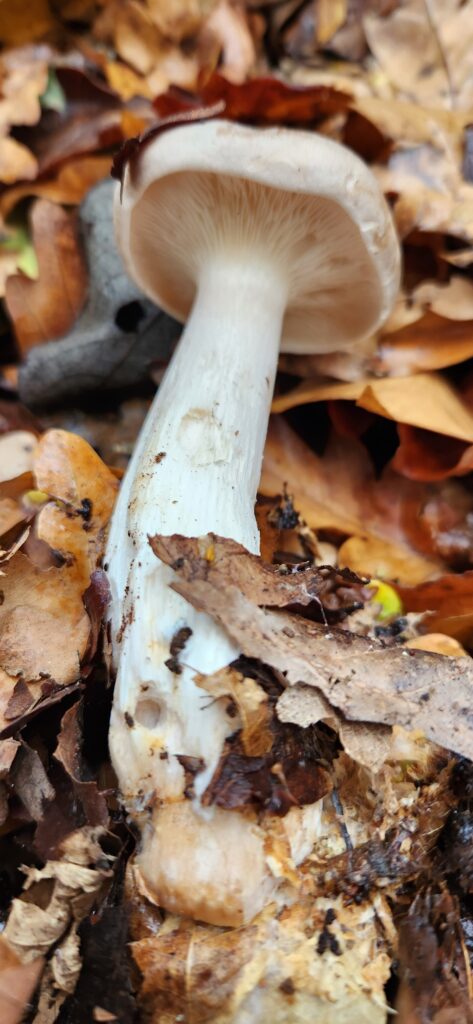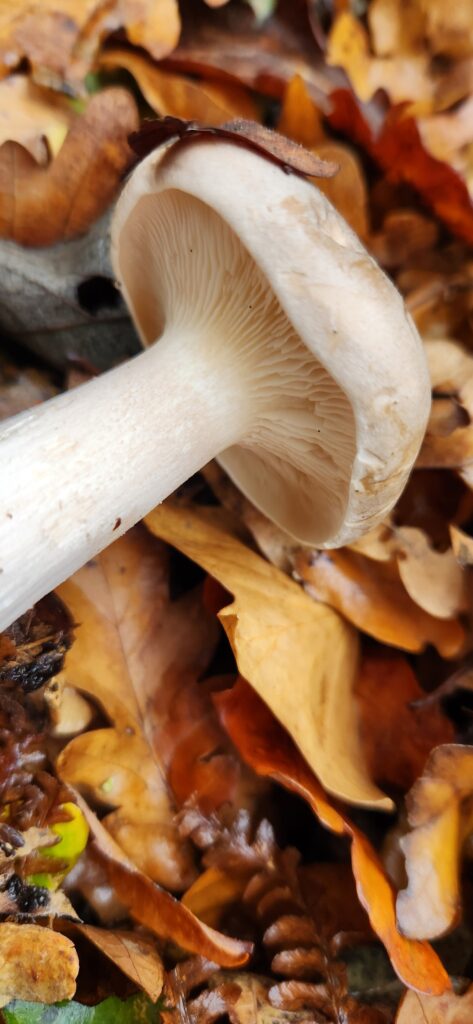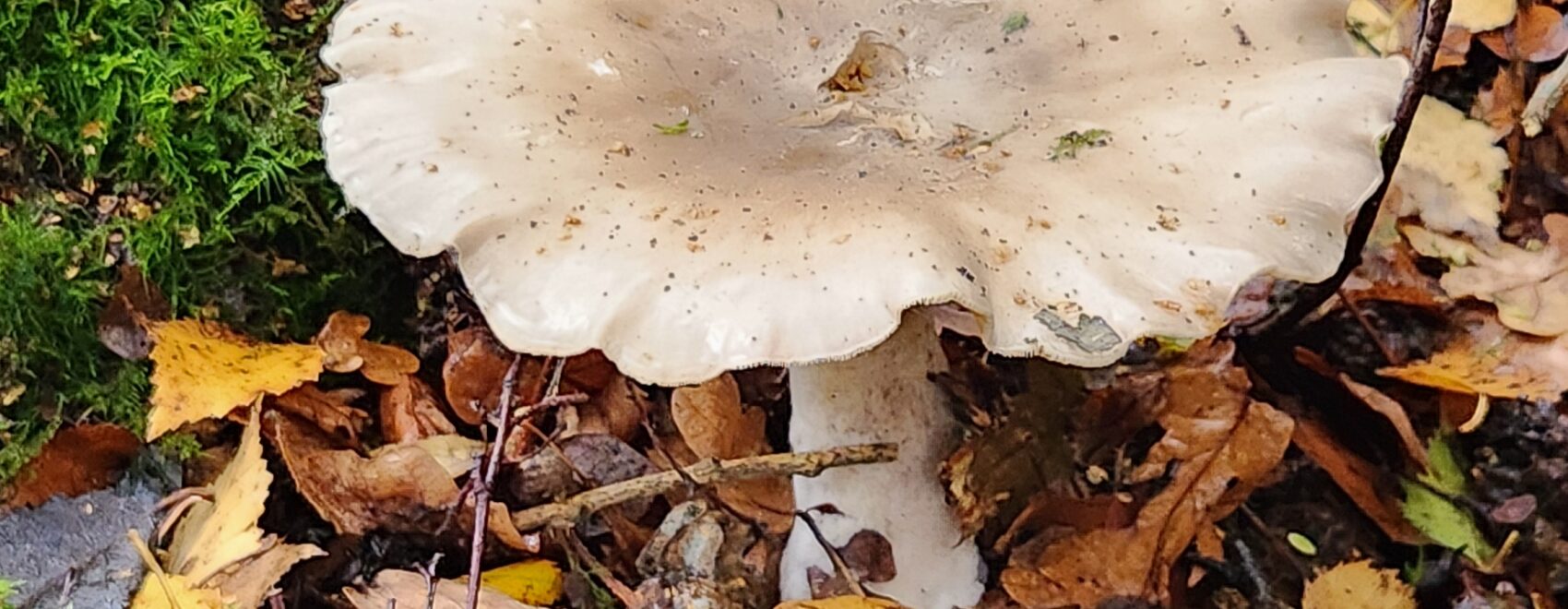
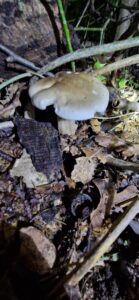
A large, greyish mushroom often seen in big groups in autumn, easily recognised by its cloudy cap and strong smell.
Other names: Clouded Agaric, Clouded Funnel Cap
Not sure about mushroom identification? Join us for the next foraging event in Charnwood, Leicestershire.
Habitat
The Clouded Funnel is a common late-autumn mushroom, found in woodlands, hedgerows, grassy clearings, and parkland. It often grows in dense troops or fairy rings, especially under beech, birch, or oak trees. It prefers moist, nutrient-rich soils and is frequently spotted after rainfall.
Identification Features
Cap: 8–20 cm across, convex at first, then flattening with a slight central depression. The colour is pale grey to smoky brown, with a moist, cloudy appearance that gives the species its name.
Gills: Crowded and decurrent, creamy-white to pale grey.
Stem: Stout, firm, and fibrous, usually paler than the cap and sometimes slightly swollen at the base.
Smell: Strong and distinctive — floral or perfumed, though often unpleasant to some people.
Texture: Thick and fleshy.
Spore Print: Cream to pale yellow.
Edibility
Although the Clouded Funnel is technically edible when cooked thoroughly, it is not recommended. It often causes digestive upset and some individuals are particularly sensitive to it. Many foragers choose to avoid eating this species altogether due to its unreliable safety record.
Foraging Season
Appears from October to December, often among the last large mushrooms of the year. Look for it in leaf litter or grassy woodland edges after damp weather.
Health Warning
Several similar-looking Clitocybe species are poisonous, including Clitocybe dealbata and Clitocybe rivulosa.
Always ensure 100% accurate identification before consuming any wild mushroom — and in this case, avoid eating to be safe.ded for eating. This species can cause stomach irritation and is easily confused with other toxic milkcaps. Always ensure positive identification before handling or consuming any wild mushrooms.
Join us for a foraging adventure in Charnwood, Leicestershire! Whether you’re a beginner or a seasoned forager, our events are a great way to learn about and identify edible fungi in their natural habitat.