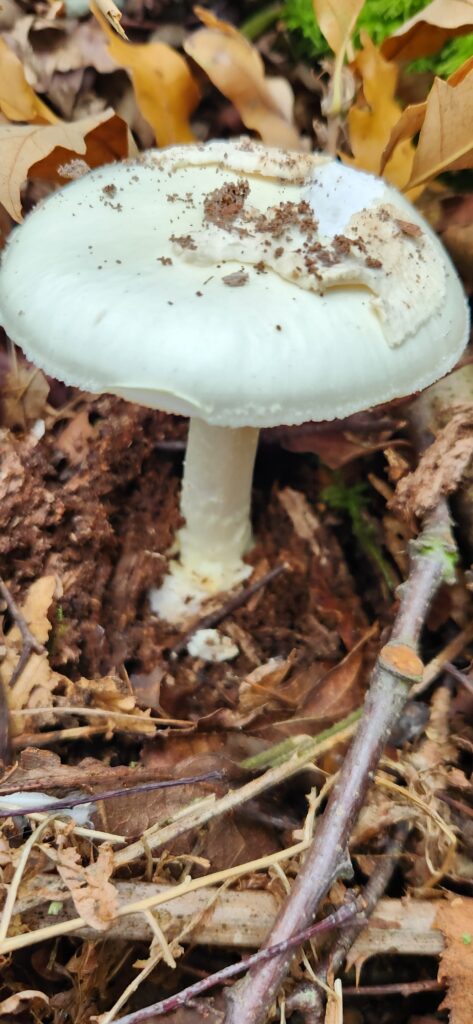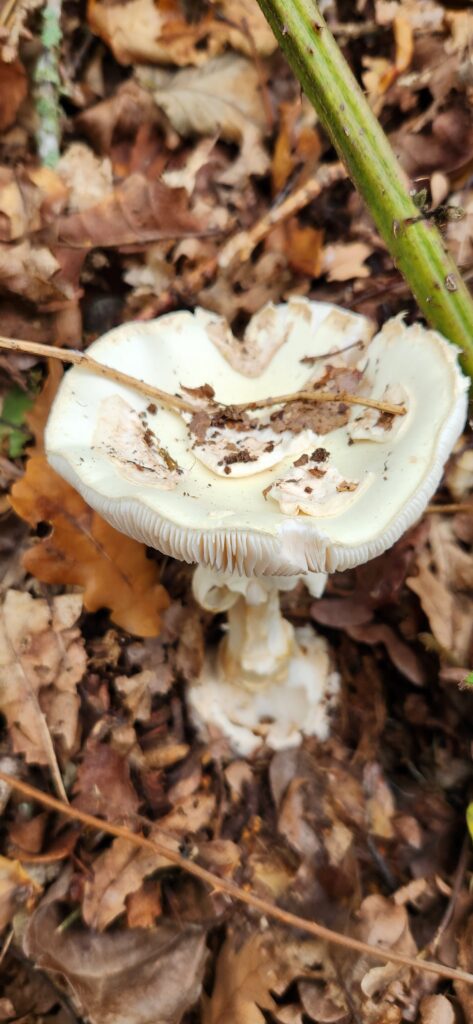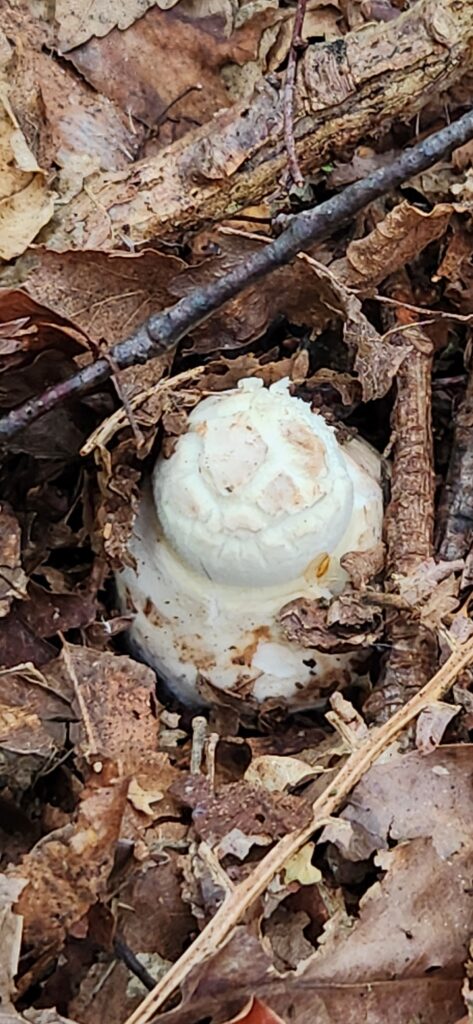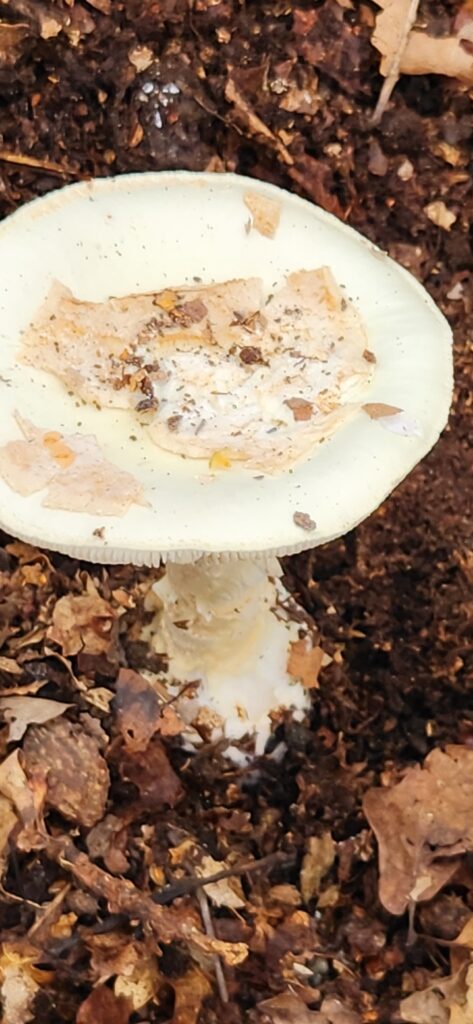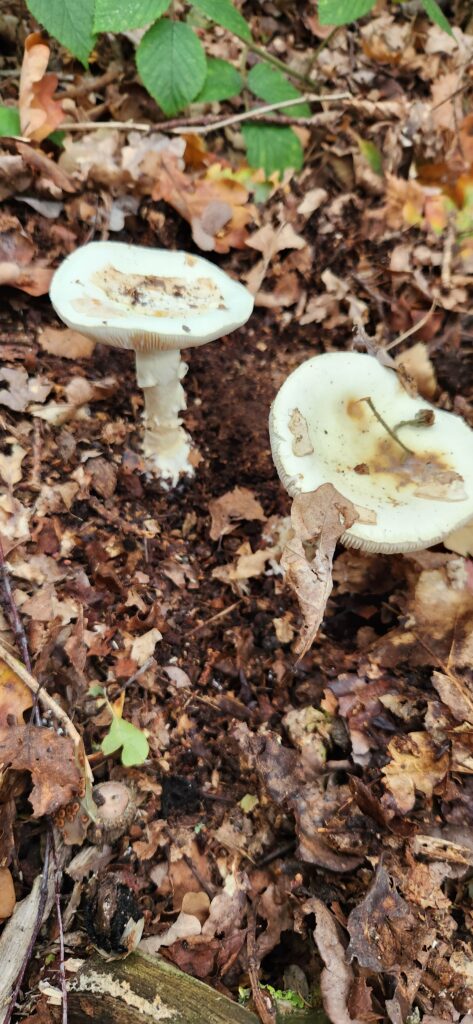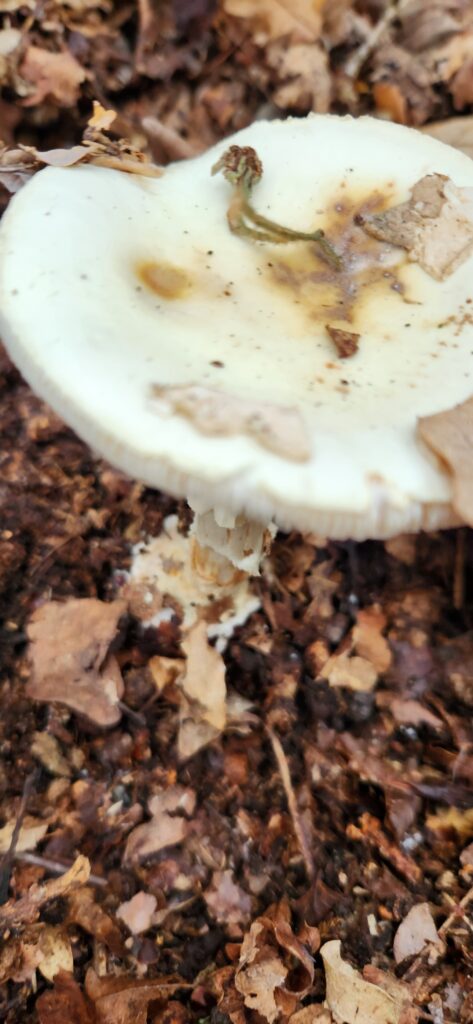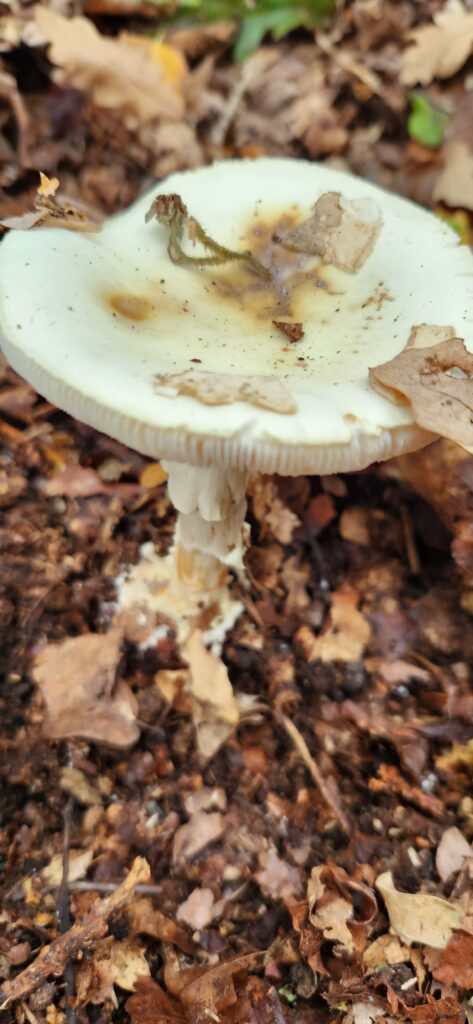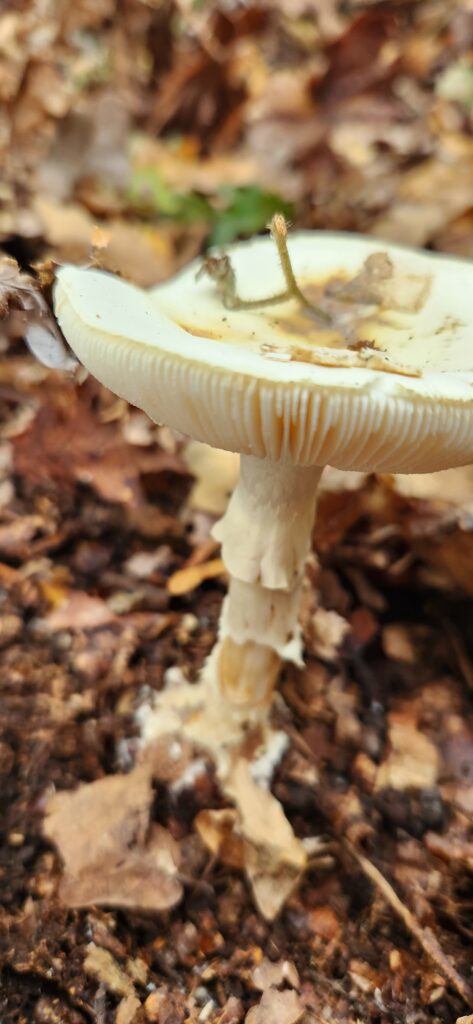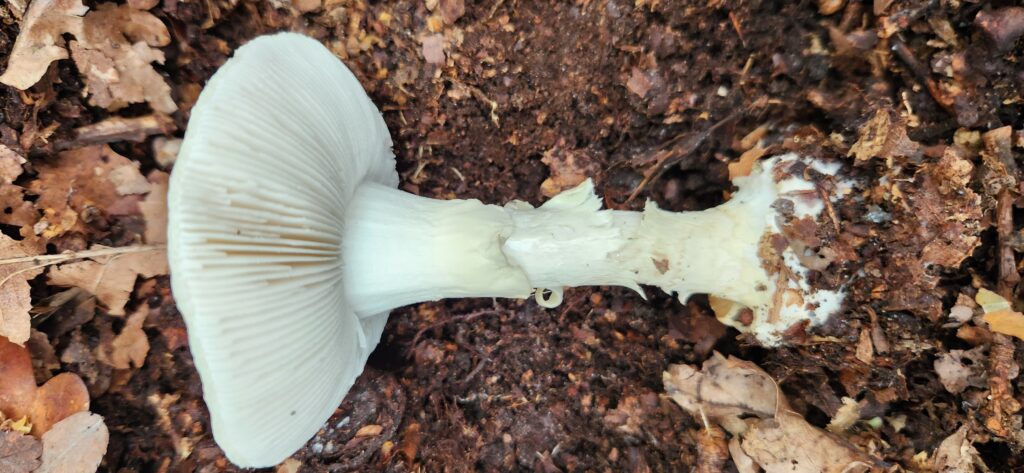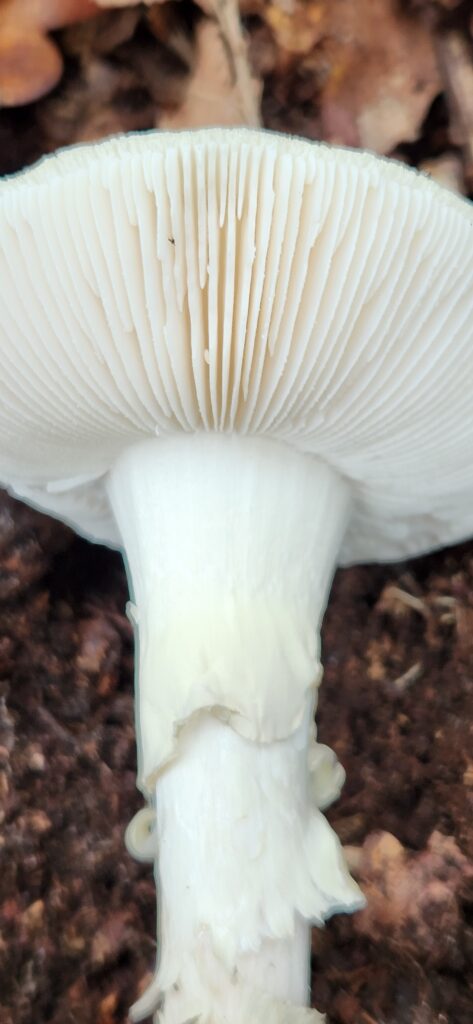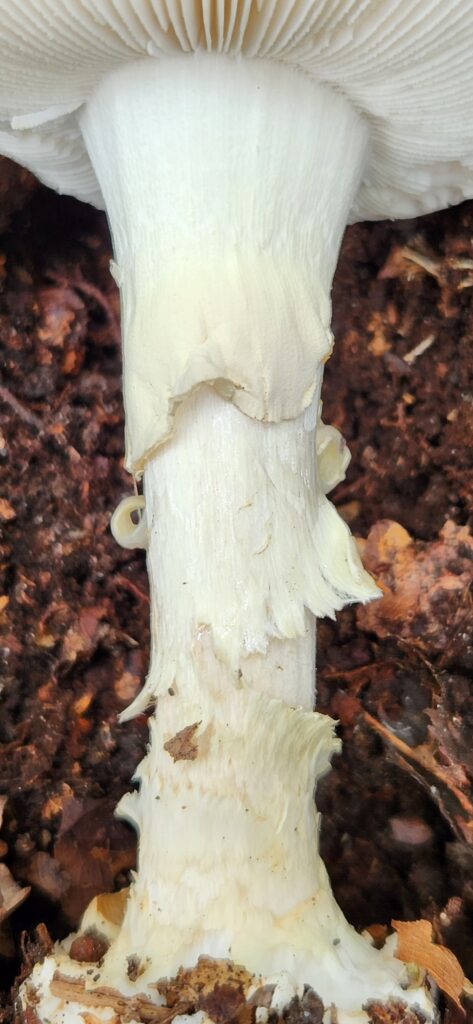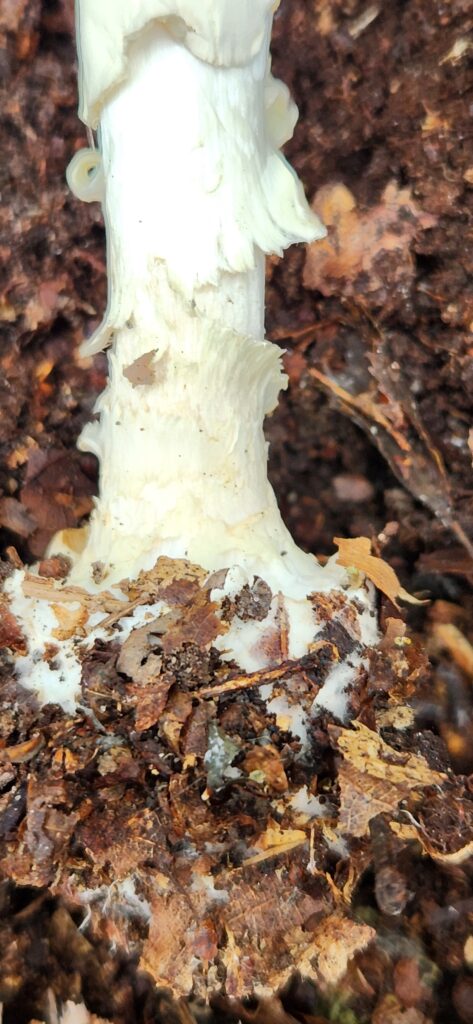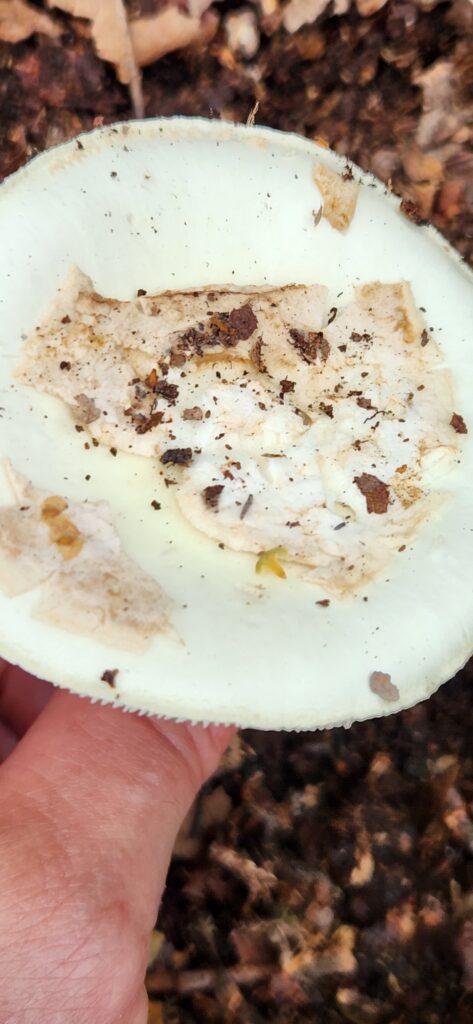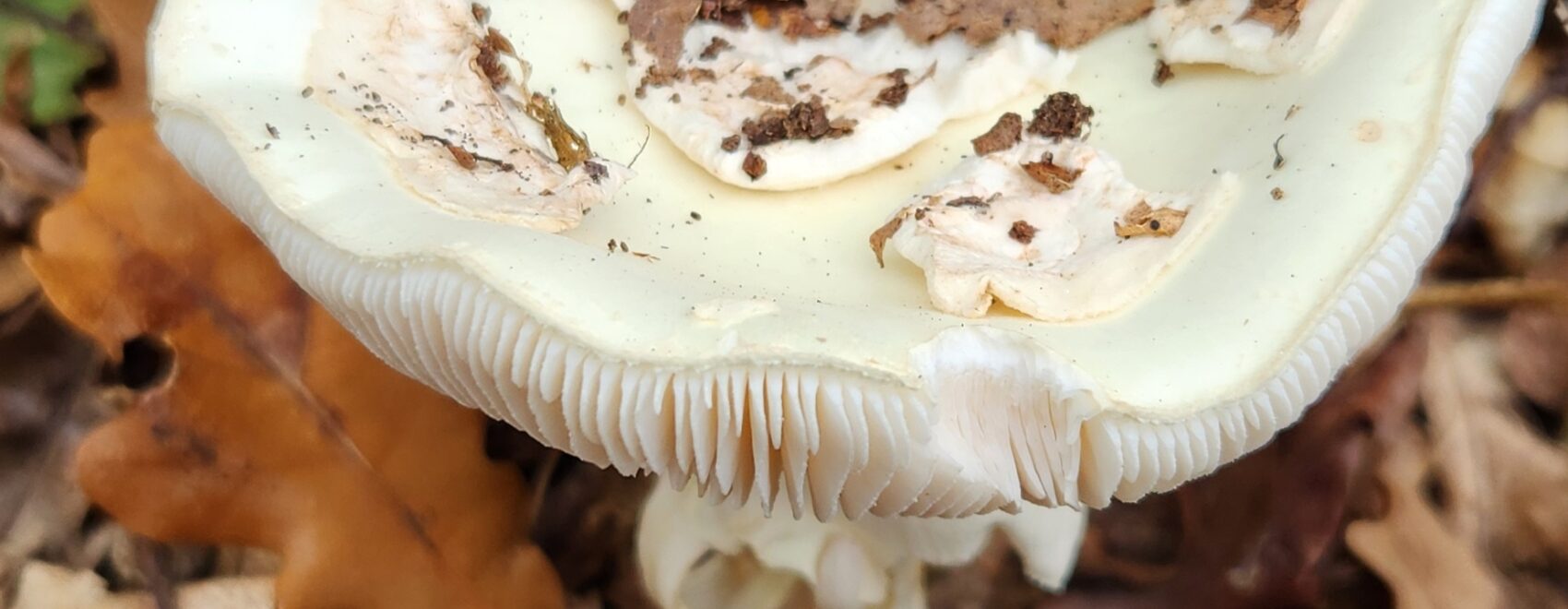
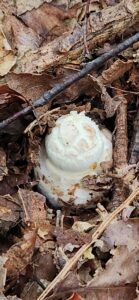
The False Death Cap is a pale, elegant mushroom commonly found in UK woodlands, often mistaken for the infamous Death Cap (Amanita phalloides) due to its similar appearance. Despite its alarming name, the False Death Cap is not deadly — though it is inedible and should never be eaten. It serves as an excellent example of why careful observation is essential in mushroom identification.
Other names: “False Death Angel” or “Citron Amanita.”
Not sure about mushroom identification? Join us for the next foraging course in Charnwood, Leicestershire.
Habitat
The False Death Cap is a mycorrhizal fungus, forming symbiotic relationships with the roots of trees such as oak, beech, birch, and pine. It favours acidic soils and is widespread across UK and European woodlands, particularly in mixed and coniferous forests.
You’ll most often encounter it from late summer to late autumn, usually August to November, especially after periods of rain.
In Leicestershire, it can be found along woodland paths and under mature beech and oak trees, where fallen leaves create a rich, damp layer of soil.
Identification Features
Cap:
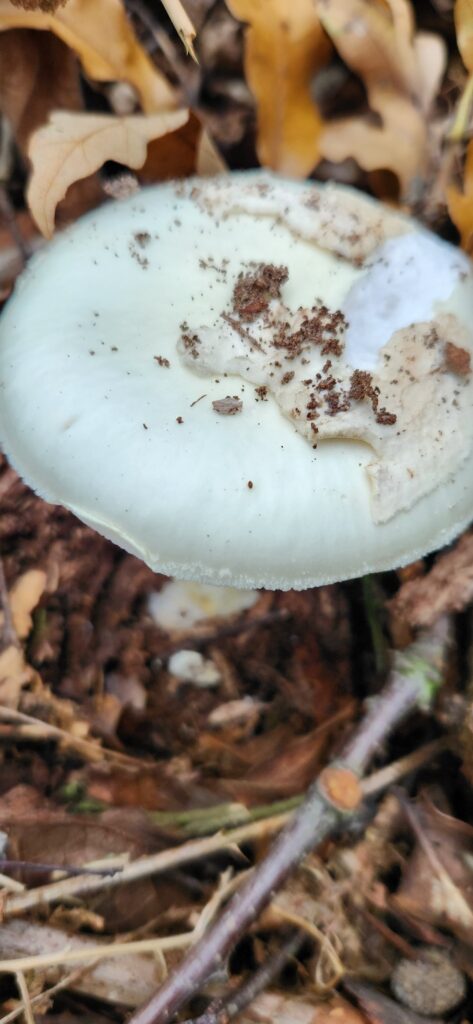
The cap is pale yellow to greenish-cream, often with a whitish tinge or faint olive hue. It’s usually 3–10 cm wide, smooth, and covered with small white or pale warty patches — remnants of the universal veil. The cap surface can become slightly sticky in wet conditions.
Gills:
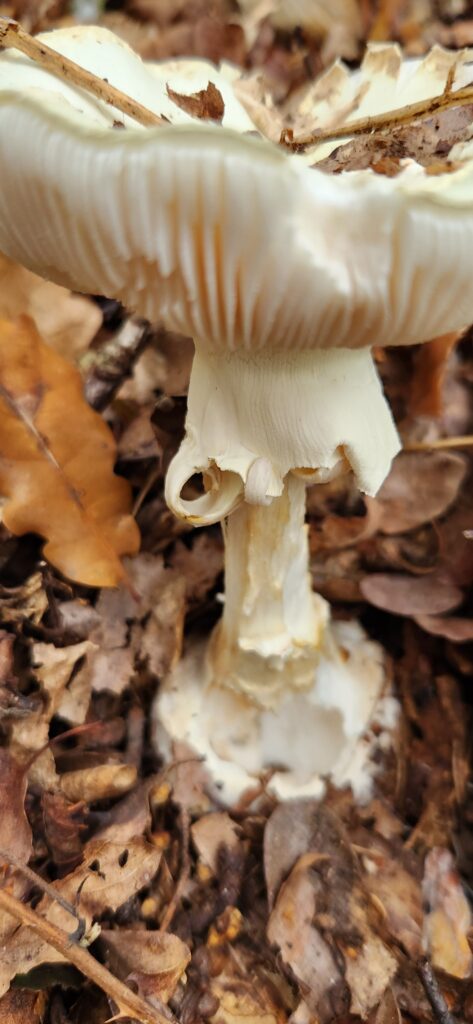
White and crowded, remaining free from the stem. They do not change colour with age.
Stem:
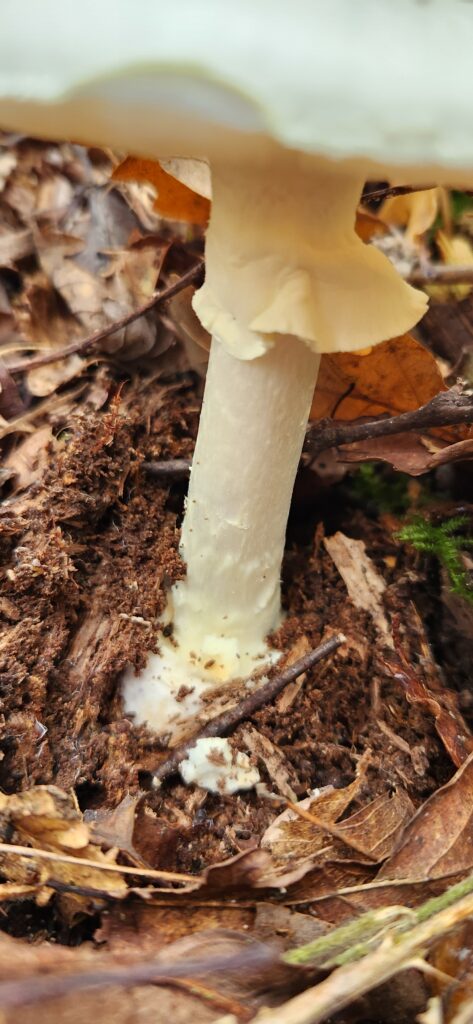
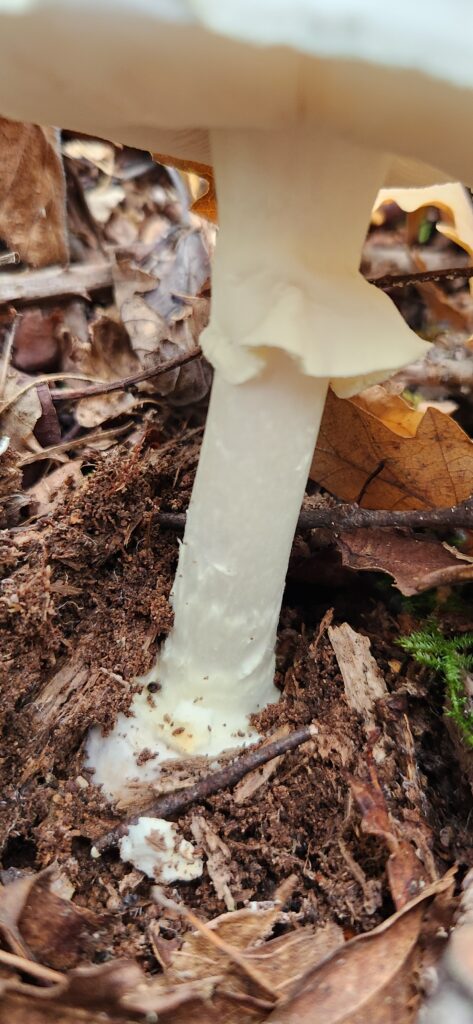
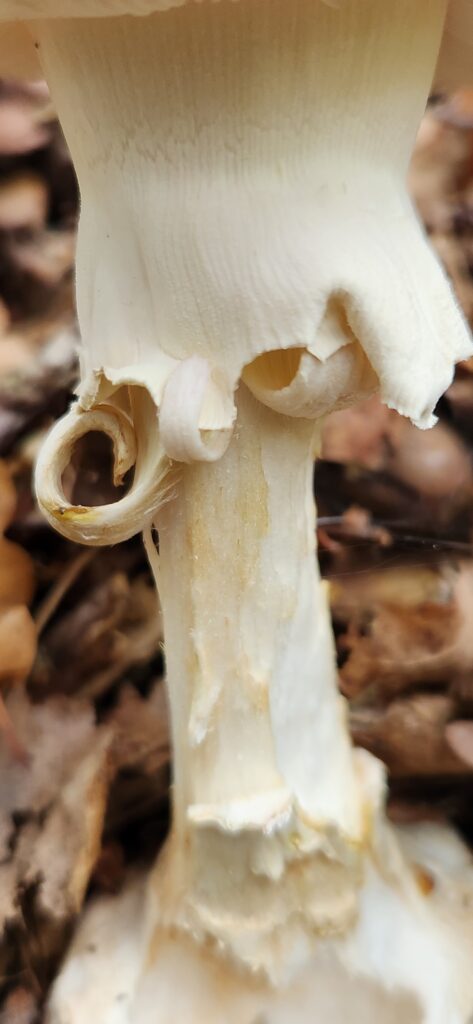
White or pale yellow, with a delicate ring and a bulbous base enclosed in a large, white volva (cup) — a signature feature of Amanita species.
Flesh:
White, firm, and with a distinct smell of raw potatoes — one of the easiest identifying features of the False Death Cap.
Spore Print:
White.
Similar Species
⚠️ Caution:
The False Death Cap closely resembles the true Death Cap (Amanita phalloides), which is lethal.
Key differences:
- Smell: The False Death Cap smells strongly of raw potatoes, whereas the Death Cap has a sickly-sweet, honey-like odour.
- Colour: The False Death Cap is paler yellow or greenish-cream, while the Death Cap is often olive-green to greyish.
- Edibility: The Death Cap is highly toxic and deadly even in small amounts. The False Death Cap, while not poisonous, is inedible and should never be consumed.
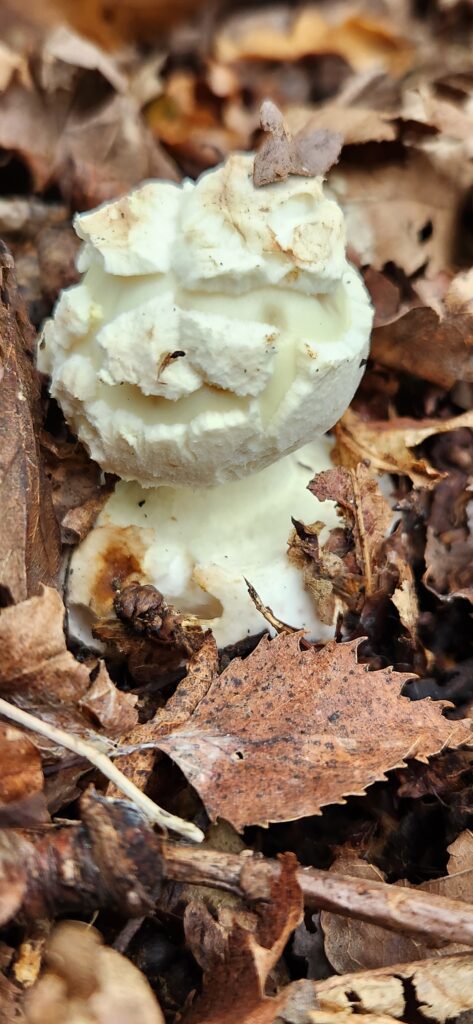
Other similar species include the Puffball stage of Amanitas, which can look like small white balls before opening. Always check for a stem, ring, and volva — puffballs lack all three.
Edibility
Although not poisonous, the False Death Cap is inedible due to its unpleasant taste and potential for confusion with deadly Amanitas. It should never be eaten, especially given its resemblance to one of the most dangerous mushrooms in the world.
This species is best admired for its beauty and used as a teaching example of safe mushroom identification.
Ecological Role
As a mycorrhizal fungus, Amanita citrina forms a beneficial partnership with trees, exchanging nutrients and improving soil health. This relationship supports forest vitality and biodiversity, making it an important part of woodland ecosystems.
Although it poses no benefit as food, its ecological role is vital in maintaining balanced woodland environments.
Join us for a foraging adventure in Charnwood, Leicestershire, to learn more about mushrooms and their fascinating roles in the ecosystem!
Our foraging courses offer the perfect opportunity to explore the wonders of fungi while emphasizing safety and sustainability in foraging.